Colombia has undergone one of the most remarkable transformations of any country in the world over the past two decades. Today, millions of international visitors arrive each year to discover vibrant cities, a golden Caribbean coastline, and the Coffee Cultural Landscape — a UNESCO World Heritage Site. The question is no longer whether to visit, but how to travel wisely — and that is exactly what this guide is for.
The best experiences in Colombia
Colombia This Year: What Visitors Actually Find
We get this question every week — from curious travelers in New York, London, and Amsterdam who have heard the stories, seen the Netflix series, and still feel a pull toward this country that refuses to be defined by its past. So let us answer it honestly, the way we would over a cup of freshly ground coffee at one of our lodges: yes, Colombia is safe to travel — when you travel with intention, choose the right destinations, and move with awareness.
Colombia's transformation over the past two decades has been extraordinary. The Colombia our guests experience — the Caribbean coast, the Coffee Cultural Landscape, the colonial towns — is vibrant, welcoming, and deeply alive. Tourism infrastructure has expanded significantly, and the destinations that welcome international visitors today are genuinely prepared to do so. At MuchoSur, we have hosted travelers from across the United States, Canada, Germany, the United Kingdom, and beyond, and the experience they find is one of warmth, beauty, and connection.
That said, Colombia is not a monolith. Like any large, complex country, it has regions that are well-suited for tourism and others that are not. The key is knowing where to go — and having the right hosts to guide you. That is exactly the philosophy behind Conscious Travel and behind MuchoSur: travel is not just about moving, but about transformation. And transformation happens best when you feel safe, connected, and looked after.
The Honest Picture: What to Be Aware Of
Petty theft — phone snatching, bag grabbing — is the most common issue tourists encounter, particularly in busy urban centres. Avoid displaying expensive cameras or phones in crowded markets. Use hotel safes. Walk with purpose. These are the same precautions you would take in Barcelona, Rome, or New Orleans. Beyond that, the main tourist corridors — Santa Marta's historic centre, the Coffee Region towns of Filandia and Quimbaya, Cartagena's walled city, Medellín's El Poblado — are genuinely safe for international visitors who exercise normal urban awareness.
The areas we would steer you away from are not tourist destinations in the first place: certain border regions, remote rural areas without infrastructure, and a handful of urban neighbourhoods in major cities that sit well outside any tourist itinerary. Your government's travel advisory will list these specifically — and they are easy to avoid entirely when your journey is built around conscious, curated destinations. Colombia rewards travelers who approach it thoughtfully, and punishes no one more than those who wander without a plan.
Where to eat in Colombia
The Right Destinations Make All the Difference
One of the most powerful safety decisions you make when visiting Colombia is simply where you choose to base yourself. Here are the three destinations where MuchoSur operates — and why each one works beautifully for international first-timers.
Santa Marta — Colombia's Caribbean Coast
Colombia's oldest city and one of its most visited, Santa Marta sits on the Caribbean coast with the Sierra Nevada mountains rising dramatically behind it. A sacred territory where the sea and the mountains meet, it is home to indigenous communities — the Kogui, Arhuaco, Wiwa, and Kankuamo peoples — who have been guardians of this landscape for centuries. The historic centre — where MuchoSur Santa Marta is located, steps from the beach and the Malecón — is well-patrolled, lively, and full of restaurants, galleries, and cultural spaces.
From Santa Marta you can access Tayrona National Park, the mountain village of Minca, Palomino, and the legendary Ciudad Perdida trek, all through organised, reputable operators. Our Urban Lodge coordinates airport transportation and tours so you never need to navigate logistics alone. The rooftop pool and bay views — along with cultural experiences like the AfroDance session and the Coca Leaf Experience — connect you to the ancestral knowledge that makes this destination unlike anywhere else in the Caribbean.
The Coffee Cultural Landscape — Filandia & Quimbaya
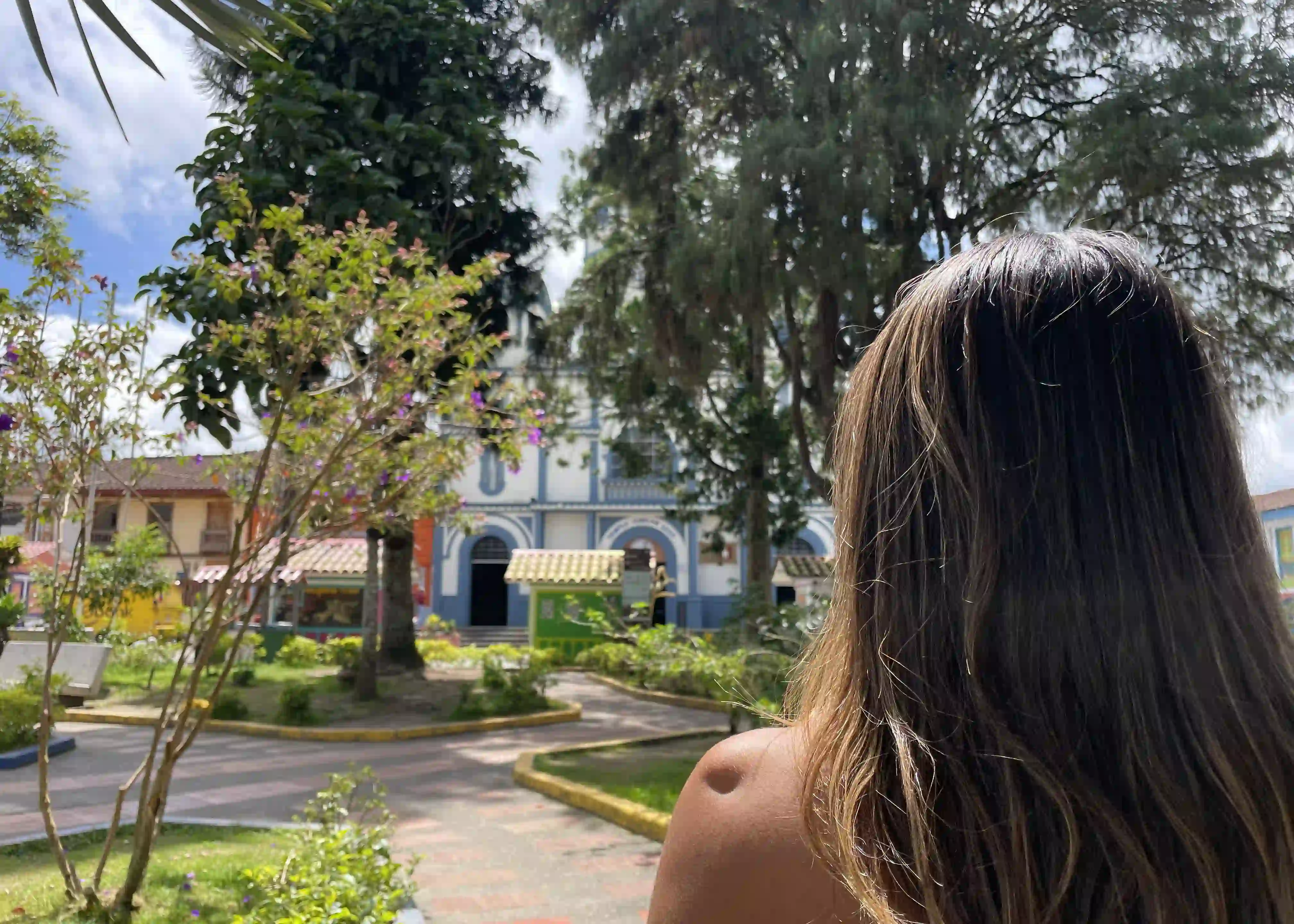
A UNESCO World Heritage Site, the Coffee Cultural Landscape is Colombia at its most photogenic and most peaceful. The colourful town of Filandia — with its traditional bahareque architecture, artisan workshops, and panoramic mirador — draws visitors who want depth over spectacle. As our Colombia's Coffee Region: Complete Travel Guide explains in detail, this region rewards slow, intentional travel above all else.
MuchoSur Filandia sits just minutes from town, immersed in nature and connected to the Barbas Bremen Nature Reserve. Sunrises smell of coffee. Evenings are quiet and full of birdsong. It is the kind of place that recalibrates your sense of what travel can feel like — and if you want to go deeper into what makes Filandia special, our guide to Filandia, Colombia: The Coffee Region's Best-Kept Secret covers every corner of this extraordinary town.
Further along the valley, MuchoSur Quimbaya is the group's first hotel and the heart of our Conscious Travel philosophy. This Nature Lodge boutique sits on a traditional coffee farm surrounded by an extensive forest of ancient trees, a bamboo grove, trails, and a waterfall whose sound sets the pulse of the landscape. There are no televisions at the lodge — instead, there is birdsong at dawn, the aroma of freshly ground coffee, and the kind of stillness that reminds you why you travel in the first place. The town of Quimbaya moves at the rhythm of rural life: peaceful streets, warm people, lush surroundings.
Where to stay in Colombia
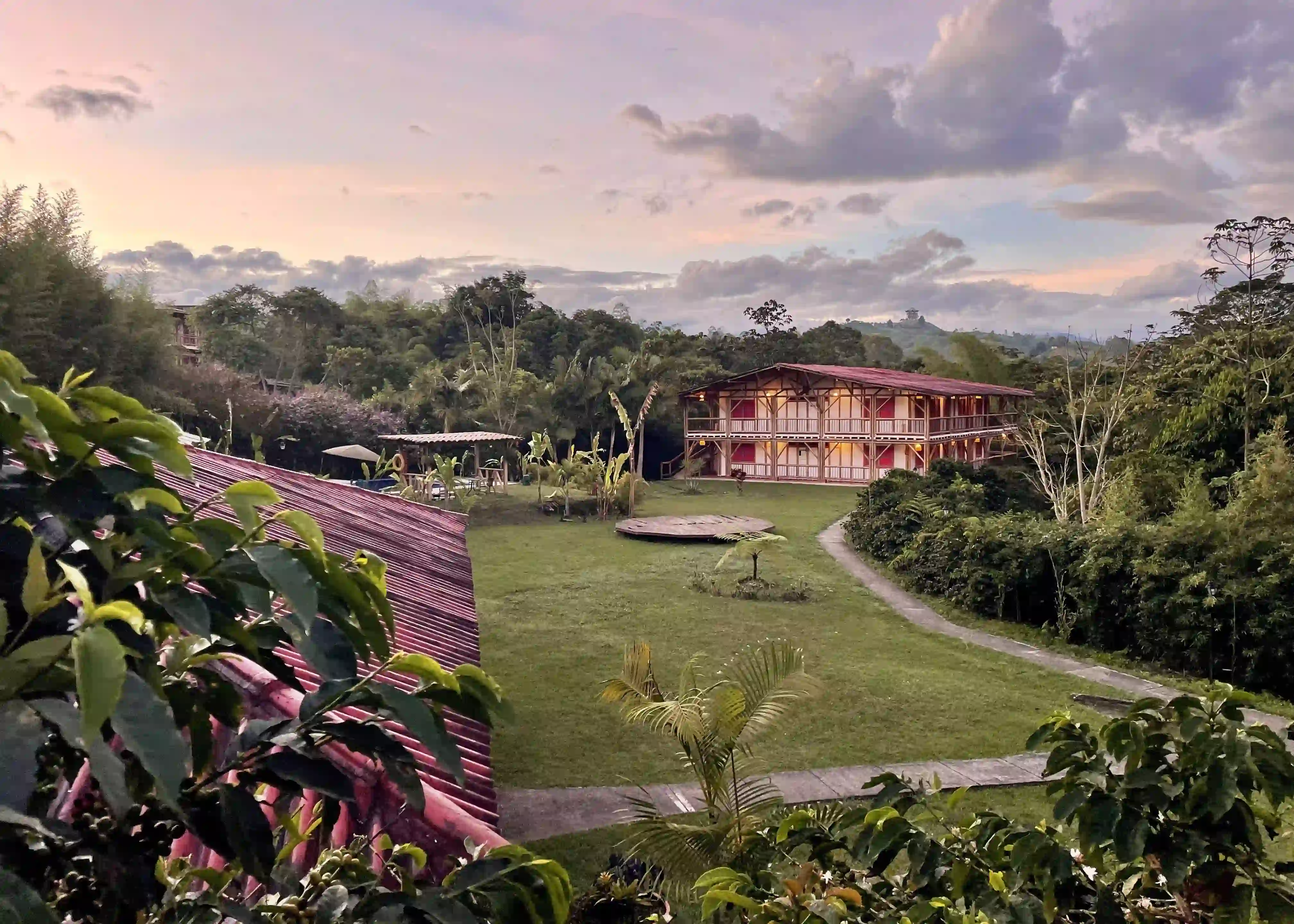
MuchoSur Filandia
A Nature Lodge with 19 rooms set minutes from the colourful town of Filandia, immersed in the Coffee Cultural Landscape (UNESCO World Heritage Site). Ecological trail gardens, a pool among native trees, a Southern-inspired restaurant, and coworking spaces overlooking the landscape invite you to live at a different pace. Connected to the Barbas Bremen Nature Reserve, this is where the culture of the South is felt in every sunrise — and in every cup of coffee.
Getting to Colombia and Moving Around
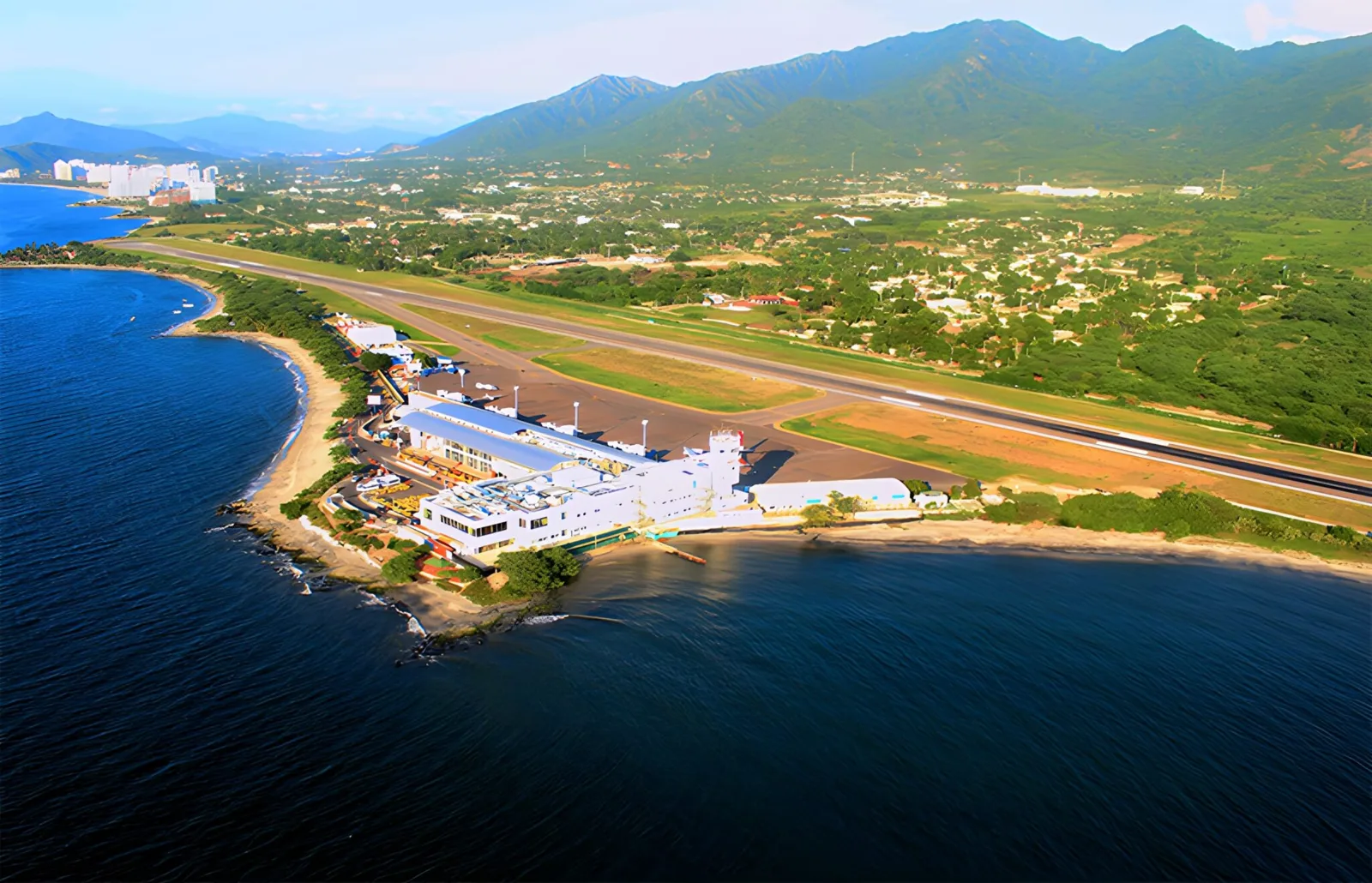
International Arrival Points
Most international flights land at one of three main airports. El Dorado International Airport (BOG) in Bogotá is the country's main hub and the most likely connection point if you are flying from Europe, the US East Coast, or Canada. José María Córdova Airport (MDE) serves Medellín. For the Caribbean coast, Simón Bolívar International Airport (SMR) in Santa Marta receives direct flights from several US cities and connects easily via Bogotá or Medellín. For the Coffee Region, the closest gateway is El Edén Airport (AXM) in Armenia, with connections from Bogotá.
From the Airport to Your Hotel
This is the moment where preparation matters most. At MuchoSur Santa Marta, we coordinate transportation to and from the airport — our team accompanies and advises you from the very first moment, so the transition from plane to hotel is smooth, safe, and stress-free. At MuchoSur Quimbaya, we offer private transportation services and personalised tours, including pick-up from Armenia Airport — the starting point for exploring the heart of the South.
If you are arranging your own transfer, use the official taxi queues inside the terminal or book a ride-hailing app before you land. Never accept rides from strangers approaching you in the arrivals hall — this applies equally to Bogotá, Medellín, and Santa Marta.
Getting Around Within Colombia
Domestic flights are affordable and frequent — the best option for covering the country's vast distances. Buses between major cities are reliable and widely used by locals and tourists alike. For the Coffee Region, many visitors rent a car or book private transfers; the roads are scenic and well-maintained, and MuchoSur Quimbaya offers on-site parking for guests who arrive by road.
English in Colombia
English proficiency varies considerably. In tourist-facing businesses — hotels, tour operators, upscale restaurants — you will generally find English speakers. In smaller towns and rural areas, Spanish is essential. A few basic phrases go a long way and will be warmly appreciated by locals. Our MuchoSur teams are bilingual and always available to bridge the gap, recommend trusted local contacts, and help you navigate any situation that arises during your stay.
When to Visit Colombia: Seasons by Region
One of Colombia's great advantages is that it is a year-round destination — but knowing the seasons helps you plan a more comfortable, rewarding trip. The country straddles the equator, which means climate is determined more by altitude and geography than by the calendar.
The Caribbean Coast (Santa Marta)
The dry season runs from December through April, with clear skies, warm water, and ideal conditions for visiting Tayrona National Park and the Ciudad Perdida trek. May through November brings occasional afternoon rains — the landscape turns an even deeper green, crowds thin, and the city feels more local and authentic. It is still very much worth visiting outside the dry season; you simply pack a light rain jacket and enjoy the quieter pace.
The Coffee Cultural Landscape (Filandia & Quimbaya)
The Coffee Region enjoys two dry windows: January to March and July to August. These are the most popular periods for visiting coffee farms, hiking the Barbas Bremen Reserve, and exploring the colourful towns. That said, the region's misty mornings and afternoon light are beautiful year-round — the lush greenery that makes it so photogenic is a direct result of the rain. Even during the wet season, mornings are typically clear and perfect for outdoor experiences, farm visits, and early birdwatching walks.
Our north is the South — and in the South, every season has its own kind of magic. Whether you arrive in the golden light of the dry season or the emerald mist of the rains, Colombia will meet you exactly where you are.
Frequently Asked Questions: Is Colombia Safe to Travel?
Is Colombia safe for first-time international visitors?
Yes — millions of international tourists visit Colombia every year without incident. The key is choosing well-established tourist destinations (Santa Marta, the Coffee Region, Cartagena, Medellín's El Poblado), booking with reputable hosts, and applying the same common-sense precautions you would in any major city. Avoid displaying valuables openly, use hotel-coordinated or app-based transport, and stay in well-lit, populated areas at night. In the destinations MuchoSur operates, our bilingual teams are always available to guide and support you.
Is Colombia safe for solo female travellers?
Many solo female travellers visit Colombia each year and have wonderful experiences. The same destination-selection principles apply: stick to established tourist corridors, book with trusted, locally-rooted operators, and connect with your hotel team for up-to-date local advice. At MuchoSur properties, our bilingual staff can recommend safe routes, trusted tour operators, and local contacts — so you are never navigating alone, even when you are travelling solo.
Do I need to speak Spanish to travel in Colombia?
Basic Spanish phrases will go a long way and are warmly appreciated by locals. In hotels, tour agencies, and tourist-facing restaurants, you will generally find English speakers. In smaller towns, rural markets, and off-the-beaten-path areas, Spanish is the primary language. Our MuchoSur teams are bilingual and always happy to help translate, recommend, and connect you with trusted local contacts throughout your stay.
Should I use cash or cards in Colombia?
Both. Major credit cards (Visa and Mastercard) are widely accepted at hotels, restaurants, and larger shops. For local markets, rural transport, and smaller vendors — especially in Coffee Region towns — cash in Colombian pesos (COP) is essential. Withdraw from ATMs inside banks or supermarkets rather than standalone street machines, and avoid exchanging money with individuals on the street. Your hotel team can always point you to the safest, most convenient option nearby.
How do I get the best rate for a stay at MuchoSur?
Always book directly at muchosur.com. By joining DelSur Rewards — our free loyalty programme — you unlock the best rate on the market, with exclusive discounts of up to 35% off on direct bookings, early access to promotions, and a more personalised experience from the moment you arrive. Joining DelSur Rewards means becoming part of a community that travels differently: consciously, curiously, and with the soul of the South as your guide.
Ready to visit Colombia?
Book directly with MuchoSur Filandia and get up to 35% off with DelSur Rewards. No middlemen — just the team that truly knows Colombia.
Check availability